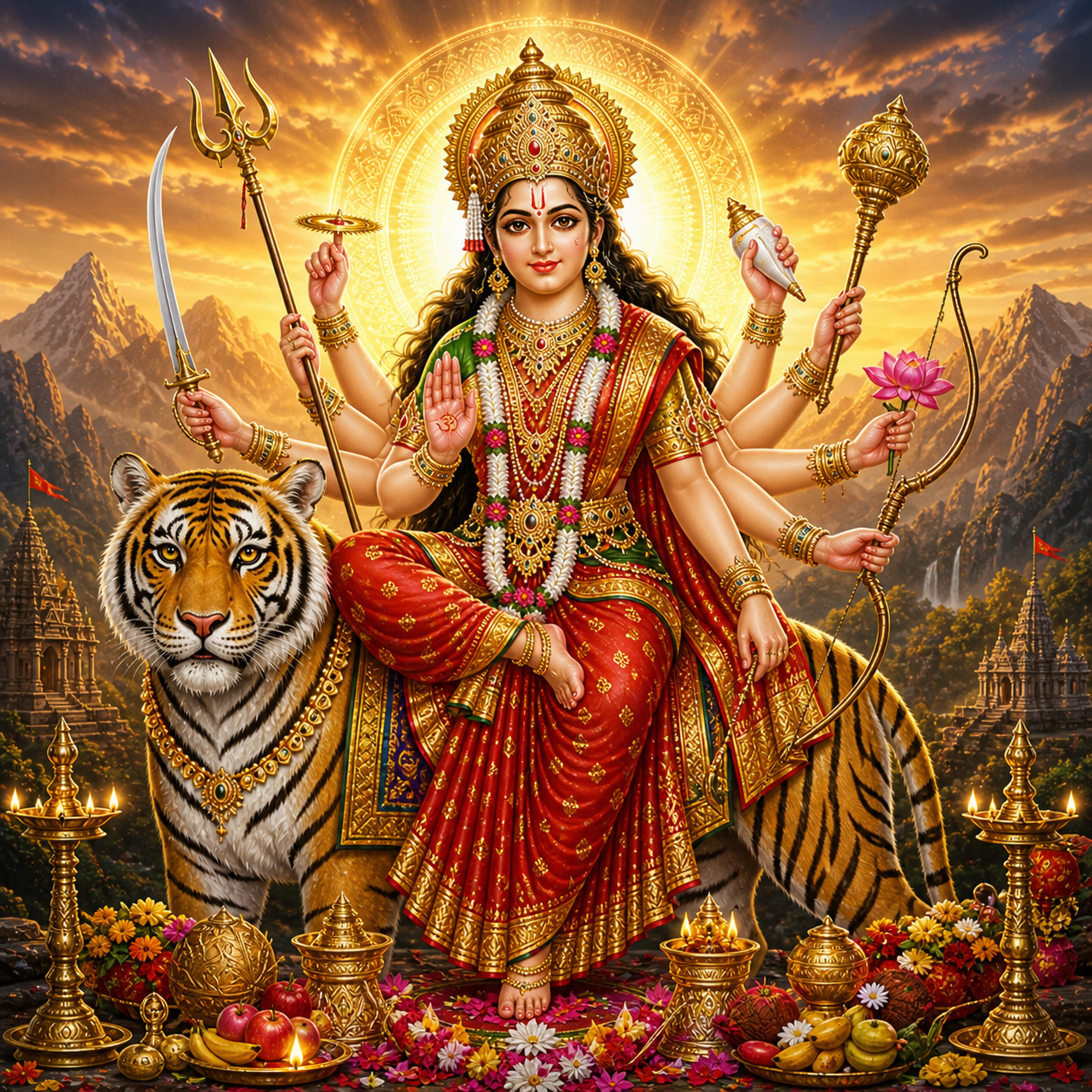
Vande Mataram Shloka
Vande Mataram Shloka is a sacred mantra dedicated to Durga, known for its transformative spiritual impact and ability to support spiritual growth.
Vande Mataram Shloka एक पवित्र मंत्र है जो Durga को समर्पित है और आध्यात्मिक उन्नति में सहायक माना जाता है।
Word-by-Word Meaning
How to Chant Vande Mataram Shloka जप विधि
⚠️ Common Mistakes to Avoid
- Chanting too fast without awareness of meaning
- Skipping days — consistency matters more than quantity
- Chanting with a distracted or restless mind
- Incorrect pronunciation — slow down and focus on each syllable
Benefits of Vande Mataram Shloka लाभ
Significance महत्व
Vande Mataram personifies India as a divine mother goddess. It was an inspirational song during the freedom movement and continues to be a sacred invocation of the divine mother in her form as the motherland.
Common Questions
Q What is the Vande Mataram Shloka and why is it important?
Vande Mataram Shloka is a sacred mantra dedicated to Durga, known for its transformative spiritual impact and ability to support spiritual growth.
Q Can I chant Vande Mataram Shloka daily?
Yes, this mantra is suitable for daily practice. Consistency builds deeper connection over time.
Q How many times should I chant Vande Mataram Shloka?
Traditional practice recommends 1-3 times; especially on national occasions and Navratri repetitions (one mala). Beginners can start with 9 or 27 repetitions.
Q Do I need initiation to chant this mantra?
No
Q What is the best time to chant Vande Mataram Shloka?
Early morning (Brahma Muhurta)
Q Are there any restrictions for chanting this mantra?
No restrictions
Continue Your Durga Practice
Deepen your connection through devotional practices
Explore More Mantras
Start with a few repetitions daily. Consistency over quantity — even 5 minutes each morning creates lasting transformation.