What Is Satvik Food? A Beginner’s Guide to Eating with Awareness
Food in Sanatan Dharma has traditionally been viewed as more than physical nourishment. It is also believed to influence the mind, emotions, energy, and overall state of consciousness.
This is where the concept of Satvik food becomes deeply meaningful.
Satvik food is often associated with clarity, balance, calmness, simplicity, and mindful living. Rooted in yogic and Ayurvedic traditions, it emphasizes fresh, natural, minimally processed foods that support both physical well-being and inner harmony.
In today’s fast-moving world filled with overstimulation, processed food, emotional burnout, and constant consumption, many people are rediscovering Satvik eating as a way to feel lighter, calmer, and more connected.
For many households, Satvik food is not experienced merely as a diet, but as an atmosphere. Freshly cooked meals, softer flavors, quieter kitchens, morning prayers, warm ghee, simple utensils, and mindful eating together often create a noticeably calmer emotional rhythm inside the home.
In this way, Satvik living becomes less about restriction and more about creating inner softness amidst modern noise.
- What Does Satvik Mean?
- What Is Satvik Food?
- Common Foods Included in a Satvik Diet
- What Foods Are Considered Non-Satvik?
- Why Is Satvik Food Important in Yoga and Spiritual Traditions?
- Why Satvik Food Feels Emotionally Different
- Can Satvik Food Help Mental Calmness?
- What Does a Simple Satvik Meal Look Like?
- Is Onion and Garlic Allowed in Satvik Food?
- Satvik Food and Seasonal Living
- How to Start Eating More Satvik
- Is Satvik Food Only for Spiritual People?
- The Quiet Spiritual Atmosphere of Satvik Living
- Why Satvik Living Feels Relevant Today
- The Emotional Experience of Satvik Eating
- Frequently Asked Questions About Satvik Food
What Does Satvik Mean?
The word “Satvik” comes from the Sanskrit word “Sattva,” which traditionally represents purity, balance, harmony, clarity, and awareness.
In yogic philosophy, foods are often understood not only through nutrition but also through their energetic effect on the body and mind.
Satvik food is traditionally associated with calmness, mindfulness, spiritual clarity, and emotional balance.
What Is Satvik Food?
Satvik food generally refers to fresh, light, natural, and minimally processed foods believed to support physical vitality and mental peace.
These foods are often:
- Freshly prepared
- Seasonal
- Easy to digest
- Mildly spiced
- Nutrient-rich
- Naturally sourced
Many spiritual traditions believe that Satvik food helps create a calmer and more balanced state of mind.
A simple Satvik meal often feels emotionally different from rushed modern eating. Food is prepared more consciously, meals are eaten more slowly, and nourishment becomes something intentional rather than hurried.
For many people, this quieter relationship with food itself becomes deeply healing.
The deeper purpose of Satvik eating is not strict dietary perfection, but conscious nourishment and mindful living.
Common Foods Included in a Satvik Diet
Satvik meals are usually prepared simply without excessive oil, heavy spices, or artificial ingredients.
What Foods Are Considered Non-Satvik?
Traditional yogic and Ayurvedic systems often classify foods into three categories:
Satvik Foods
Associated with:
- calmness
- clarity
- emotional balance
- mindfulness
Rajasic Foods
Associated with:
- overstimulation
- restlessness
- intensity
- excessive activity
Examples may include very spicy foods, excess caffeine, and highly stimulating eating habits.
Tamasic Foods
Associated with:
- heaviness
- lethargy
- dullness
- stagnation
Examples may include stale food, overly processed food, excessive alcohol, or food lacking freshness.
Many yogic traditions believe the quality of food influences not only the body, but also thoughts, emotions, and mental clarity.
Why Is Satvik Food Important in Yoga and Spiritual Traditions?
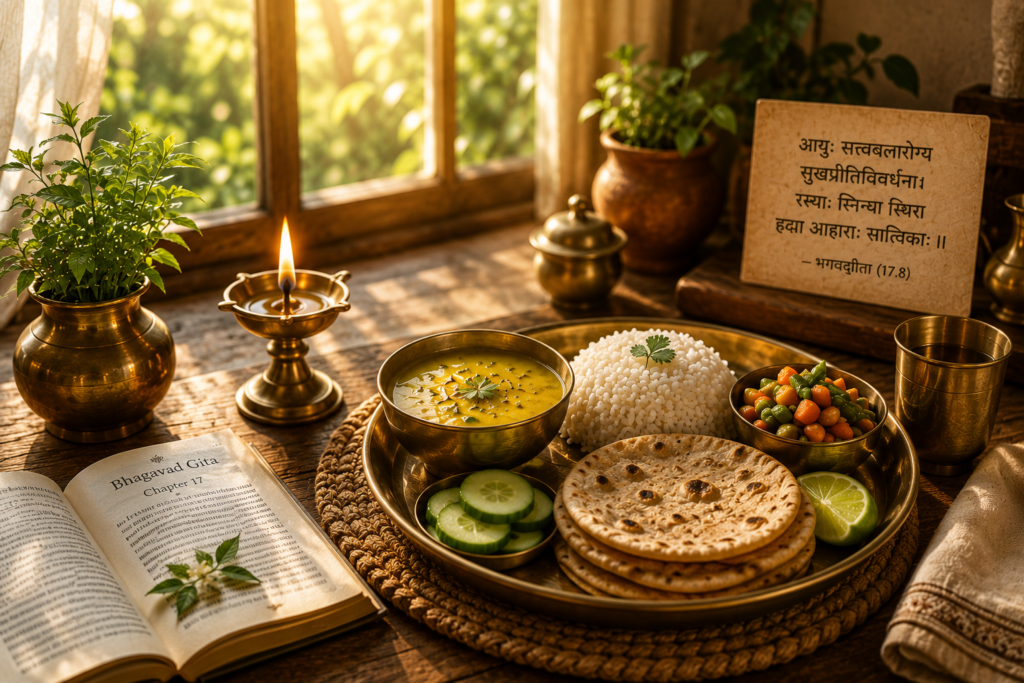
Satvik eating is deeply connected with yoga, meditation, Ayurveda, and spiritual discipline.
Many practitioners believe lighter and cleaner foods help support:
- meditation
- emotional calmness
- mindful awareness
- better concentration
- disciplined living
“When food is pure, the mind becomes pure.
— Chandogya Upanishad
For this reason, many yogis and spiritual practitioners prefer simpler meals that create less physical heaviness and mental distraction.
Why Satvik Food Feels Emotionally Different
Many people who begin eating more Satvik meals describe subtle emotional changes that go beyond physical digestion.
Meals often feel:
- calmer
- lighter
- emotionally grounding
- less overstimulating
- more comforting
Unlike highly processed or overly stimulating foods, Satvik meals are traditionally associated with steadiness and simplicity.
For many families, Satvik cooking is connected with slower mornings, fresh ingredients, gratitude before meals, devotional music, temple visits, or peaceful evening routines.
“Food carries not only nourishment, but also emotional atmosphere.
— Sanatan Reflection
This emotional softness is one reason many people feel naturally drawn toward Satvik eating during spiritually reflective periods.
Can Satvik Food Help Mental Calmness?
Many people today feel emotionally overstimulated from:
- constant screen exposure
- fast-paced lifestyles
- irregular eating habits
- processed food consumption
- mental clutter and stress
In this environment, Satvik eating often feels less like a restrictive diet and more like a return to simplicity.
Some people describe feeling:
- lighter mentally
- calmer emotionally
- more mindful while eating
- less impulsive around food
- more connected to routine and discipline
Satvik food is not only about what is eaten, but also about how consciously and peacefully food is prepared and consumed.
What Does a Simple Satvik Meal Look Like?
A Satvik meal is often balanced, comforting, and uncomplicated.
Example of a Simple Satvik Meal
- Fresh fruits
- Khichdi or light rice dishes
- Seasonal vegetables
- Homemade curd
- Ghee in moderation
- Herbal tea
- Nuts or dry fruits
Meals are often prepared fresh and eaten mindfully without excess stimulation.
The experience of eating Satvik food is often as important as the ingredients themselves. A peaceful environment, slower eating, gratitude, and emotional calmness are all traditionally considered part of mindful nourishment.
Is Onion and Garlic Allowed in Satvik Food?
This is one of the most common questions people ask.
Different traditions follow different approaches.
Some spiritual and yogic traditions avoid onion and garlic because they are believed to stimulate restlessness or excessive sensory activity.
However, many households include them as part of a balanced everyday diet.
The larger principle of Satvik eating is conscious nourishment rather than rigid judgment.
Satvik Food and Seasonal Living
Traditional Indian food culture has long emphasized seasonal eating.
Satvik meals often naturally align with:
- seasonal produce
- local ingredients
- digestive balance
- mindful eating rhythms
This is one reason Satvik eating feels deeply grounding during changing seasons and emotionally stressful periods.
Many people rediscover Satvik eating during spiritually reflective periods because simpler food often creates a quieter mental atmosphere.
How to Start Eating More Satvik
You do not need to transform your lifestyle overnight.
Many people gradually move toward Satvik eating through small mindful changes.
Prioritize freshly prepared meals over packaged or heavily processed foods.
Gradually reduce excessive sugar, fried foods, and overly spicy meals.
Eat slowly and without constant distraction from screens or stress.
Traditional practices often emphasize preparing food peacefully and with gratitude.
Notice how different foods affect your energy, emotions, and mental clarity.
Is Satvik Food Only for Spiritual People?
Not at all.
Many people are drawn toward Satvik eating simply because it encourages:
- mindful consumption
- healthier routines
- emotional balance
- lighter eating habits
- reduced overstimulation
Even people with no formal spiritual practice often appreciate the simplicity and grounding nature of Satvik meals.
The Quiet Spiritual Atmosphere of Satvik Living
Many people associate Satvik living with a noticeably calmer emotional environment.
Homes centered around simple meals, mindful routines, devotional practices, and conscious consumption often carry a softer and more grounded rhythm.
The atmosphere may include:
- morning prayers
- fresh homemade meals
- peaceful cooking
- reduced overstimulation
- mindful eating
- devotional music or mantra chanting
Satvik living is often less about achieving perfection and more about creating small moments of peace within everyday life.
For many people, even preparing food more slowly and consciously begins changing the emotional energy of daily routines.
Why Satvik Living Feels Relevant Today
Modern life constantly pushes people toward excess, speed, noise, stimulation, and unconscious consumption.
Satvik living moves in the opposite direction.
It encourages:
- slowing down
- mindful eating
- emotional clarity
- balanced routines
- intentional living
- greater awareness
“Peace begins where excess ends.
— Sanatan Reflection
For many people, Satvik food becomes less about dietary rules and more about creating inner calmness through everyday choices.
The Emotional Experience of Satvik Eating
Many people describe Satvik meals as emotionally different from highly stimulating foods.
The experience often feels:
- lighter
- calmer
- cleaner
- grounding
- emotionally peaceful
A simple homemade meal eaten slowly, with gratitude and minimal distraction, can itself become a mindful spiritual practice.
In a world constantly encouraging speed, stimulation, and excess, Satvik food gently moves in the opposite direction, toward simplicity, awareness, and inner calmness.
In many traditions, nourishment is considered sacred because food carries both physical energy and emotional atmosphere.