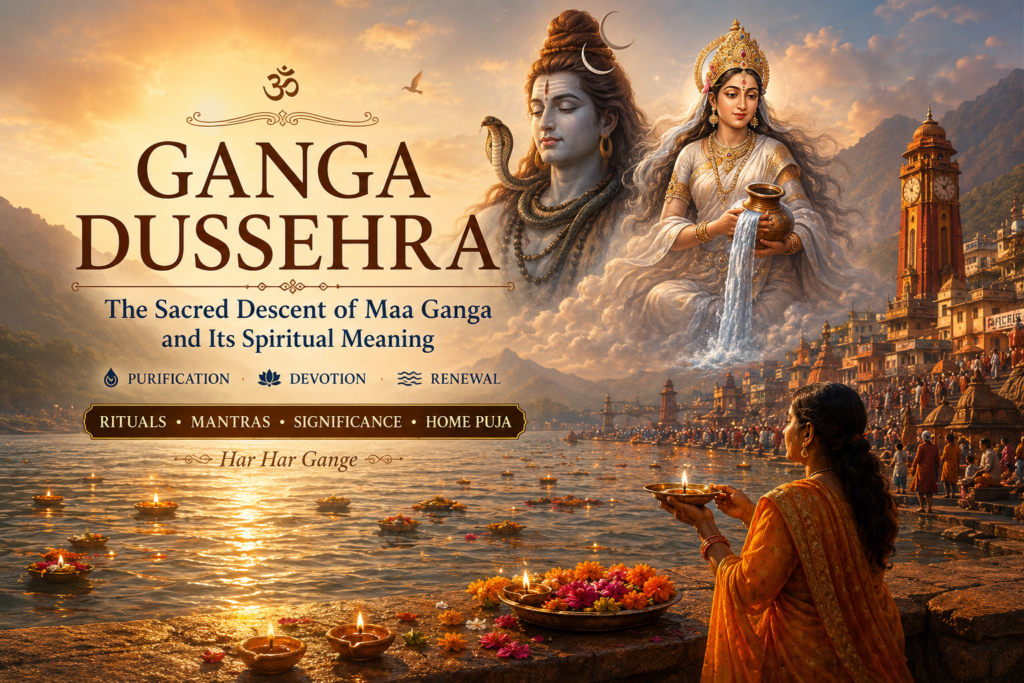
For centuries, devotees across India have looked toward the flowing waters of Maa Ganga not merely as a river, but as a living symbol of purification, compassion, surrender, and divine grace.
To stand beside the Ganga at sunrise, hear temple bells echo through the mist, watch diyas float gently across the water, and feel the quiet movement of the river is, for many people, an experience that goes beyond ritual. It feels deeply emotional, calming, and spiritually grounding.
Ganga Dussehra is the sacred festival that commemorates the descent of Maa Ganga from the heavens to Earth. But beyond mythology, the festival carries a deeper spiritual message about inner cleansing, emotional release, humility, and learning to flow through life with greater awareness.
Even today, in a world filled with noise, overstimulation, and emotional exhaustion, the symbolism of Maa Ganga continues to feel profoundly relevant.
- What Is Ganga Dussehra?
- Why Ganga Dussehra Is Spiritually Important
- The Story of Maa Ganga’s Descent to Earth
- Why Lord Shiva Is Deeply Connected to Maa Ganga
- The Spiritual Meaning of Maa Ganga
- Why Water Is Sacred in Sanatan Dharma
- How Sacred Rivers Shape Spiritual Consciousness
- The Emotional Experience of Standing Near the Ganga
- Why Ganga Dussehra Still Feels Spiritually Relevant Today
- Sacred Ganga Mantras for Devotion and Inner Calm
- Simple Ways to Spiritually Observe Ganga Dussehra
- How Devotees Traditionally Celebrate Ganga Dussehra
- The Spiritual Meaning of Ganga Snan
- Can You Celebrate Ganga Dussehra at Home?
- A Simple Ganga Dussehra Puja at Home
- Best Flowers, Diyas & Offerings for Maa Ganga
- Sacred Ganga Mantras for Prayer and Inner Calm
- Why Charity and Donation Are Important on Ganga Dussehra
- The Emotional Experience of Evening Diya Offerings
- Why Ganga Dussehra Feels So Emotionally Healing
- How to Bring the Spirit of Maa Ganga Into Everyday Life
- Frequently Asked Questions About Ganga Dussehra
What Is Ganga Dussehra?
Ganga Dussehra is a sacred Hindu festival that celebrates the divine descent of Maa Ganga to Earth. It is traditionally observed during the Shukla Paksha Dashami of the Jyeshtha month in the Hindu calendar.
The word “Dussehra” here is associated with the removal of ten kinds of sins or impurities through devotion, prayer, and spiritual awareness.
Across India, especially in places like Haridwar, Varanasi, Rishikesh, Prayagraj, and Gangotri, devotees gather near sacred ghats to perform Ganga snan, offer diyas, chant mantras, sing bhajans, and seek spiritual cleansing.
For many devotees, Ganga Dussehra is not only a celebration of a sacred river, but also a reminder that healing and renewal begin when the mind learns to let go and flow peacefully.
Why Ganga Dussehra Is Spiritually Important
Ganga Dussehra carries deep spiritual significance because Maa Ganga is traditionally viewed as a divine purifier in Sanatan Dharma.
Her flowing waters symbolize:
- cleansing
- compassion
- surrender
- grace
- spiritual movement
- emotional release
Unlike rigid spiritual symbolism, Maa Ganga represents flow. She reminds devotees that life constantly moves, changes, purifies, and renews itself.
The spiritual essence of Ganga Dussehra lies not only in outer purification, but also in emotional and inner cleansing.
Many devotees believe that this sacred day is especially powerful for:
- prayer
- reflection
- gratitude
- spiritual discipline
- releasing emotional heaviness
- reconnecting with devotion
The Story of Maa Ganga’s Descent to Earth
The story behind Ganga Dussehra is one of the most emotionally powerful narratives in Hindu tradition.
It is a story of devotion, tapasya, compassion, and divine intervention.
Raja Bhagirath’s Tapasya and Devotion
According to ancient Hindu scriptures, Raja Bhagirath performed intense tapasya for years to bring Maa Ganga from the heavens to Earth.
His purpose was not personal gain or power.
Raja Bhagirath wished to liberate the souls of his ancestors and bring peace to them through the sacred waters of Maa Ganga.
“True devotion seeks upliftment not only for oneself, but for all beings connected to us.
— Sanatan Reflection
Bhagirath’s unwavering determination became a timeless symbol of spiritual perseverance, humility, and selfless devotion.
Even today, the phrase “Bhagirath Prayas” is often used in India to describe an extraordinary effort made with sincerity and dedication.
Why Maa Ganga Descended from Heaven
Moved by Raja Bhagirath’s tapasya, Maa Ganga agreed to descend from the heavens to Earth.
However, her divine force was considered so immense that the Earth itself could not withstand the impact of her descent.
This led to another sacred intervention.
How Lord Shiva Received Ganga in His Jata
To protect the Earth, Lord Shiva compassionately received Maa Ganga within his jata, his sacred matted locks.
Instead of allowing her powerful descent to overwhelm the world, Shiva gently released her flowing streams across the Earth.
🔱ShivaशिवThis imagery carries deep spiritual symbolism.
Lord Shiva represents:
- stillness
- stability
- cosmic balance
- spiritual containment
Maa Ganga represents:
- movement
- purification
- emotional flow
- divine grace
Together, they symbolize the harmony between stillness and movement, power and compassion.
The Sacred Journey of Ganga Across Earth
As Maa Ganga flowed across the Earth, her waters became associated with purification, healing, devotion, and moksha.
For centuries, pilgrims have traveled to sacred teerths, riverbanks, and ghats believing that the presence of Maa Ganga carries spiritual energy capable of calming the mind and uplifting the soul.
Why Lord Shiva Is Deeply Connected to Maa Ganga
The connection between Lord Shiva and Maa Ganga is one of the most sacred relationships in Hindu symbolism.
Maa Ganga flowing through Shiva’s jata represents the idea that divine power must be balanced with wisdom and stillness.
Without inner stillness, even sacred energy can become overwhelming. Shiva symbolizes the calmness needed to guide spiritual force peacefully into the world.
This symbolism continues to resonate deeply in modern life.
Many people today experience emotional overload, mental noise, and constant overstimulation. The imagery of Shiva and Ganga reminds devotees that peace arises when movement is guided by awareness.
The Spiritual Meaning of Maa Ganga
Beyond mythology, Maa Ganga carries profound spiritual symbolism.
She represents:
- purification
- surrender
- emotional healing
- renewal
- compassion
- spiritual flow
For many devotees, the flowing river becomes a reminder that life is meant to move, not remain emotionally stagnant.
“Like a sacred river, healing often begins when we stop resisting the flow of life.
— Sanatan Reflection
Maa Ganga is also associated with humility.
No matter how many people approach her, she continues to flow without judgment, offering nourishment, cleansing, and grace freely.
This is one reason why so many spiritual seekers feel emotionally connected to rivers and flowing water.
Why Water Is Sacred in Sanatan Dharma
Water holds deep spiritual importance throughout Sanatan traditions.
It is associated with:
- purification
- life force
- renewal
- spiritual cleansing
- emotional release
Rivers, rain, oceans, and sacred water rituals are woven into countless spiritual practices.
Many rituals involving water are not only symbolic acts, but also reminders to release emotional heaviness and reconnect with inner clarity.
How Sacred Rivers Shape Spiritual Consciousness
Across India, sacred rivers have historically shaped pilgrimage, meditation, prayer, and spiritual reflection.
Riverbanks naturally encourage:
- silence
- contemplation
- slower thinking
- devotional awareness
For many people, sitting quietly near flowing water creates a feeling of emotional release that is difficult to describe intellectually.
This is one reason sacred rivers continue to hold such profound emotional significance in spiritual traditions.
The Emotional Experience of Standing Near the Ganga
Many devotees describe the experience of standing beside Maa Ganga as emotionally transformative.
The atmosphere often includes:
- temple bells echoing through the air
- diyas floating gently across the water
- morning Ganga aarti chants
- cool river breeze
- soft bhajans
- mist rising above the ghats
For many people, Maa Ganga does not simply feel like a river. She feels alive with devotion, memory, silence, and spiritual presence.
In these moments, the constant mental noise of everyday life often begins to soften.
People pray.
Some cry quietly.
Others sit silently in reflection.
The emotional power of sacred spaces often lies in how deeply they help the mind slow down.
Why Ganga Dussehra Still Feels Spiritually Relevant Today
Modern life constantly pushes people toward:
- speed
- distraction
- emotional overload
- endless stimulation
- mental clutter
In this environment, festivals like Ganga Dussehra feel deeply grounding.
They remind people to:
- slow down
- reflect
- reconnect with devotion
- simplify the mind
- release emotional heaviness
The deeper message of Ganga Dussehra is not only purification of the body, but purification of the mind, emotions, and inner life.
For many people, even sitting quietly near water, lighting a diya, chanting softly, or offering gratitude becomes emotionally healing.
Sacred Ganga Mantras for Devotion and Inner Calm
Popular mantras associated with Maa Ganga include:
- Om Shri Gangayai Namah
- Ganga Stotram
- Ganga Gayatri Mantra
- Har Har Gange
Many devotees chant these mantras during:
- meditation
- Ganga snan
- evening prayers
- diya offerings
- Ganga Dussehra rituals
Even a few moments of sincere chanting can help create a calmer and more devotional atmosphere.
Simple Ways to Spiritually Observe Ganga Dussehra
Even if someone cannot visit the Ganga physically, the spiritual essence of the festival can still be honored meaningfully.
Simple practices include:
- lighting a diya
- offering gratitude near water
- chanting Ganga mantras
- practicing silence
- donating to those in need
- meditating near rivers or natural spaces
- reflecting on emotional cleansing and renewal
The heart of Ganga Dussehra lies not in elaborate ritual alone, but in cultivating humility, gratitude, purity, and emotional clarity.
“Like flowing water, spiritual healing often begins when the heart learns to release what it no longer needs to carry.
— Sanatan Reflection
Ganga Dussehra ultimately reminds devotees that purification is not only about sacred rivers or outer rituals. It is also about learning to release emotional heaviness, quiet the mind, and reconnect with a deeper sense of inner flow.
Whether through prayer, silence, mantra chanting, or simply sitting beside flowing water in gratitude, the spirit of Maa Ganga continues to inspire surrender, renewal, and spiritual calmness across generations.
In the next part, we explore how devotees traditionally celebrate Ganga Dussehra through rituals, home practices, mantras, diya offerings, charity, and mindful spiritual observances.
📜 Skanda PuranaHow to Celebrate Ganga Dussehra at Home: Rituals, Mantras & Spiritual Practices
Ganga Dussehra is not only a celebration of Maa Ganga’s sacred descent to Earth, it is also a deeply emotional and devotional occasion centered around purification, gratitude, prayer, and spiritual renewal.
For many devotees, the festival becomes a quiet pause from the noise of everyday life. Diyas glow beside flowing water, mantras echo softly through homes and temples, and people turn inward through prayer, reflection, and acts of compassion.
While many devotees visit sacred ghats and rivers on this day, Ganga Dussehra can also be observed meaningfully at home with sincerity and devotion.
- What Is Ganga Dussehra?
- Why Ganga Dussehra Is Spiritually Important
- The Story of Maa Ganga’s Descent to Earth
- Why Lord Shiva Is Deeply Connected to Maa Ganga
- The Spiritual Meaning of Maa Ganga
- Why Water Is Sacred in Sanatan Dharma
- How Sacred Rivers Shape Spiritual Consciousness
- The Emotional Experience of Standing Near the Ganga
- Why Ganga Dussehra Still Feels Spiritually Relevant Today
- Sacred Ganga Mantras for Devotion and Inner Calm
- Simple Ways to Spiritually Observe Ganga Dussehra
- How Devotees Traditionally Celebrate Ganga Dussehra
- The Spiritual Meaning of Ganga Snan
- Can You Celebrate Ganga Dussehra at Home?
- A Simple Ganga Dussehra Puja at Home
- Best Flowers, Diyas & Offerings for Maa Ganga
- Sacred Ganga Mantras for Prayer and Inner Calm
- Why Charity and Donation Are Important on Ganga Dussehra
- The Emotional Experience of Evening Diya Offerings
- Why Ganga Dussehra Feels So Emotionally Healing
- How to Bring the Spirit of Maa Ganga Into Everyday Life
- Frequently Asked Questions About Ganga Dussehra
How Devotees Traditionally Celebrate Ganga Dussehra
Across India, Ganga Dussehra is observed through rituals associated with purification, prayer, charity, and gratitude toward Maa Ganga.
In places like Haridwar, Varanasi, Prayagraj, Rishikesh, and Gangotri, devotees gather near sacred ghats before sunrise to perform Ganga snan and participate in evening Ganga aarti ceremonies.
The atmosphere often feels deeply emotional:
- temple bells ringing through the air
- floating diyas illuminating the river
- chants of “Har Har Gange”
- incense drifting through the breeze
- devotees standing silently in prayer
For many people, Ganga Dussehra feels less like a festival and more like a sacred emotional experience of surrender, gratitude, and inner cleansing.
The Spiritual Meaning of Ganga Snan
One of the most important rituals associated with Ganga Dussehra is Ganga snan, taking a holy dip in the river.
Traditionally, devotees believe this sacred act symbolizes:
- purification
- renewal
- release of emotional heaviness
- spiritual cleansing
- surrender to divine grace
The deeper meaning of Ganga snan is not only cleansing the body, but also letting go of mental and emotional burdens.
For many devotees, even touching sacred water or offering prayers beside flowing rivers becomes emotionally healing.
Can You Celebrate Ganga Dussehra at Home?
Absolutely.
While visiting the Ganga or sacred rivers is deeply meaningful, the spiritual essence of Ganga Dussehra can also be honored sincerely at home.
What matters most is:
- devotion
- gratitude
- mindfulness
- inner intention
Many devotees who cannot travel choose to create a peaceful devotional atmosphere at home through prayer, diya offerings, mantra chanting, and simple rituals.
In Sanatan traditions, sincerity of devotion is often considered more important than physical distance from sacred places.
A Simple Ganga Dussehra Puja at Home
You do not need elaborate arrangements to observe Ganga Dussehra meaningfully.
Even simple acts done with awareness can feel deeply spiritual.
Begin by cleaning your home mandir or prayer area. Many devotees also place a bowl or kalash of clean water near the altar as a symbolic representation of Maa Ganga.
Light a diya using ghee or sesame oil while offering gratitude and prayer.
White flowers, lotus flowers, and fresh water are commonly offered during Ganga prayers.
Spend a few quiet minutes chanting Maa Ganga mantras or listening to soft devotional bhajans.
Sit quietly for a few moments reflecting on emotional cleansing, gratitude, and renewal.
Best Flowers, Diyas & Offerings for Maa Ganga
Many devotees prefer simple and sattvic offerings during Ganga Dussehra.
The atmosphere of devotion often matters more than extravagance.
Simple offerings made with humility and sincerity are traditionally considered spiritually meaningful.
Sacred Ganga Mantras for Prayer and Inner Calm
Popular mantras associated with Maa Ganga include:
- Om Shri Gangayai Namah
- Har Har Gange
- Ganga Gayatri Mantra
- Ganga Stotram
Many devotees chant these mantras during:
- meditation
- evening diya rituals
- Ganga snan
- prayer and reflection
- Ganga Dussehra puja
Even a few minutes of calm chanting can help create a softer and more devotional emotional atmosphere.
Why Charity and Donation Are Important on Ganga Dussehra
Acts of compassion and charity hold special importance during Ganga Dussehra.
Many devotees offer:
- food donations
- water donations
- clothing
- support to temples or ashrams
- help to those in need
This tradition reflects the qualities associated with Maa Ganga herself:
- generosity
- nourishment
- compassion
- unconditional giving
“Like a flowing river, true spirituality nourishes others without expecting anything in return.
— Sanatan Reflection
The Emotional Experience of Evening Diya Offerings
One of the most beautiful moments during Ganga Dussehra is the evening diya ritual.
As the sun begins to set, devotees often light diyas and place them near rivers, water bodies, or home altars while softly chanting prayers.
The atmosphere often feels:
- peaceful
- reflective
- emotionally cleansing
- spiritually grounding
Watching a diya float gently across water often becomes a symbolic reminder to release fear, heaviness, and emotional burden into the flow of life.
For many devotees, these quiet moments become more meaningful than elaborate celebrations.
Why Ganga Dussehra Feels So Emotionally Healing
Many spiritual festivals focus on celebration and joy.
Ganga Dussehra carries something softer.
It often feels:
- reflective
- emotionally cleansing
- inward
- calming
- devotional
The symbolism of flowing water naturally encourages people to:
- let go
- slow down
- release emotional heaviness
- reconnect with gratitude
- become mentally quieter
In modern life filled with constant noise and overstimulation, this emotional stillness feels deeply valuable.
How to Bring the Spirit of Maa Ganga Into Everyday Life
The spiritual essence of Maa Ganga is not limited to one festival day.
Many devotees try to carry her symbolism into daily life through:
- mindfulness
- emotional softness
- compassion
- humility
- gratitude
- simplicity
- spiritual awareness
Maa Ganga reminds devotees that true purification often begins when the heart becomes lighter, calmer, and more compassionate.
Even small moments of silence, prayer, gratitude, or mindful living can become spiritual practices inspired by her flow.
Frequently Asked Questions About Ganga Dussehra
What is Ganga Dussehra?+
Why is Ganga snan important during Ganga Dussehra?+
Can Ganga Dussehra be celebrated at home?+
Which mantras are chanted during Ganga Dussehra?+
What offerings are made to Maa Ganga?+
Why is Lord Shiva connected to Maa Ganga?+
“Like sacred rivers, the deepest spiritual journeys often begin quietly, through surrender, reflection, and learning to flow with greater awareness.
— Sanatan Reflection
Ganga Dussehra ultimately reminds devotees that purification is not only an outer ritual, but also an inner process of releasing emotional heaviness, softening the mind, and reconnecting with spiritual stillness.
Whether through Ganga snan, mantra chanting, lighting a diya, offering charity, or simply sitting quietly in gratitude, the spirit of Maa Ganga continues to inspire peace, renewal, and sacred flow across generations.
📜 Skanda Purana