Some sacred days invite celebration.
Others invite transformation.
Parama Ekadashi belongs to the latter.
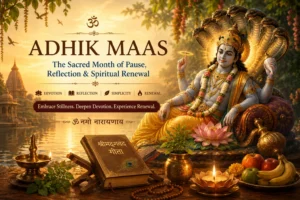
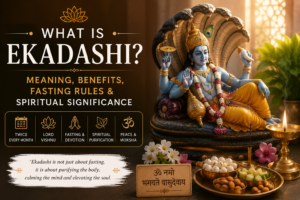
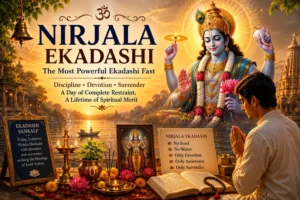
Observed during the Krishna Paksha of Purushottam Maas, also known as Adhik Maas, Parama Ekadashi is regarded as one of the most spiritually significant Ekadashis in the Hindu calendar. Dedicated to Lord Vishnu, this sacred observance is not merely about fasting from food. It is an opportunity to cultivate devotion, strengthen self-discipline, purify the mind, and reconnect with deeper spiritual values.
Parama Ekadashi is observed during the Krishna Paksha of Purushottam Maas (Adhik Maas). Dedicated to Lord Vishnu, it is traditionally observed through fasting, prayer, mantra chanting, charity, and spiritual reflection.
For centuries, devotees have observed Parama Ekadashi through fasting, prayer, mantra chanting, charity, and reflection. Yet its deeper message remains remarkably relevant today. In a world filled with constant noise, endless distractions, and emotional overload, Parama Ekadashi offers something increasingly rare: a chance to pause, simplify, and return to what truly matters.
- What Is Parama Ekadashi?
- Why Parama Ekadashi Is Considered So Powerful
- The Sacred Significance of Purushottam Maas
- The Spiritual Meaning of Parama Ekadashi
- Lord Vishnu and the Energy of Preservation
- The Power of Self-Discipline
- The Sacred Story Behind Parama Ekadashi
- Lessons from the Parama Ekadashi Vrat Katha
- Spiritual Benefits of Observing Parama Ekadashi
- Preparing Your Mind for Parama Ekadashi
- Why Parama Ekadashi Matters in Modern Life
- Common Mistakes People Make While Observing Ekadashi
- Frequently Asked Questions About Parama Ekadashi
- A Sacred Invitation to Inner Transformation
Quick Answer
Parama Ekadashi is observed during the Krishna Paksha of Purushottam Maas (Adhik Maas) and is dedicated to Lord Vishnu. It is considered one of the most spiritually powerful Ekadashis and is traditionally observed through fasting, Vishnu worship, mantra chanting, charity, and self-discipline.
What Is Parama Ekadashi?
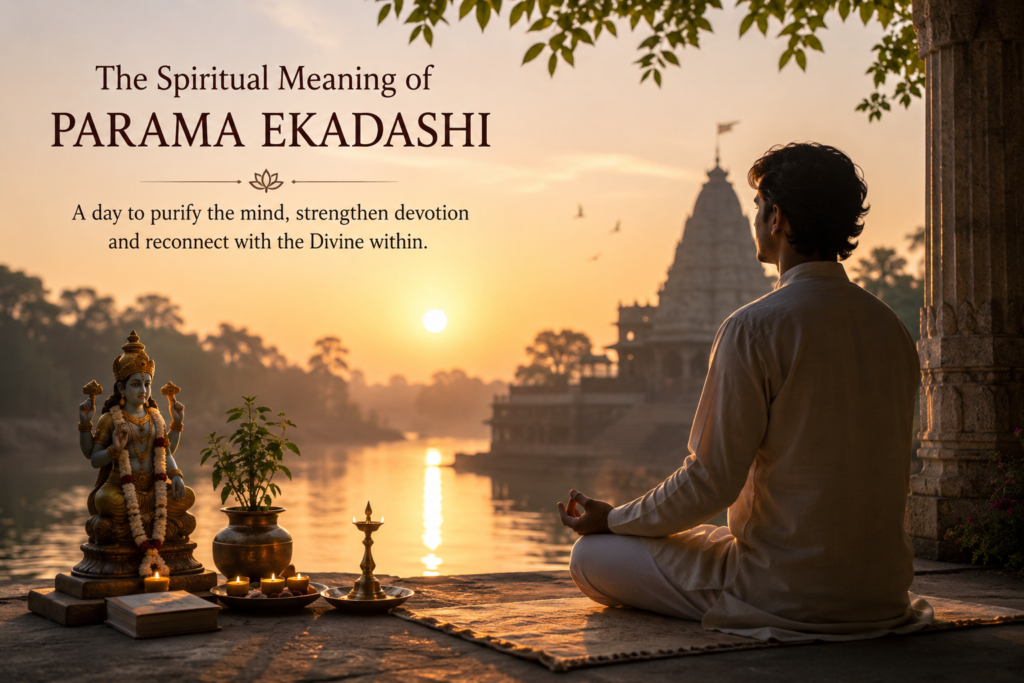
Parama Ekadashi falls on the eleventh lunar day of the waning phase of the Moon during Purushottam Maas, the sacred extra month periodically added to the Hindu lunar calendar.
The word Parama means supreme, highest, or ultimate. The observance is considered especially auspicious because it occurs during a month that Hindu traditions dedicate entirely to Lord Vishnu.
Unlike many religious observances that focus primarily on external rituals, Parama Ekadashi encourages both outward worship and inward transformation. The day serves as an invitation to examine one’s thoughts, habits, intentions, and relationship with Dharma.
Many devotees use this sacred occasion to deepen their spiritual practice through prayer, mantra chanting, scriptural study, acts of charity, and conscious self-discipline.
Parama Ekadashi occurs during Purushottam Maas, the sacred month dedicated entirely to Lord Vishnu, making it one of the most spiritually significant Ekadashis in the Hindu calendar.
Why Parama Ekadashi Is Considered So Powerful
Every Ekadashi holds spiritual significance within Sanatan Dharma, but Parama Ekadashi is often regarded as especially powerful because it combines the sanctity of Ekadashi with the sacred energy of Purushottam Maas.
Ekadashi itself is traditionally associated with purification, devotion, self-restraint, and spiritual awareness. When these practices are observed during the month dedicated to Lord Vishnu, many devotees believe their spiritual impact becomes even more meaningful.
The observance encourages people to temporarily step away from routine distractions and create space for prayer, reflection, and conscious living. Rather than focusing solely on worldly concerns, Parama Ekadashi invites devotees to strengthen their connection with Dharma and cultivate greater awareness of their inner life.
For many people, this day becomes a spiritual reset, an opportunity to slow down, reconnect with faith, and bring greater intention into everyday living.
The Sacred Significance of Purushottam Maas
To understand Parama Ekadashi fully, it is important to understand the sacred nature of Purushottam Maas.
Adhik Maas occurs approximately every thirty-two months to harmonize the lunar and solar calendars. While this additional month serves an astronomical purpose, Hindu tradition views it as far more than a calendrical adjustment.
According to sacred traditions, this month was blessed by Lord Vishnu and became known as Purushottam Maas, the month of the Supreme Being.
Because of this association, Purushottam Maas is regarded as a highly favorable period for spiritual growth. Many devotees intensify their spiritual practices during this month by increasing prayer, meditation, scripture reading, charity, pilgrimage, and devotional observances.
Purushottam Maas reminds us that spiritual growth is not always about doing more. Sometimes growth begins by slowing down, becoming aware of our habits, and consciously choosing a higher path.
For this reason, Parama Ekadashi is often seen as one of the most meaningful opportunities within the entire Purushottam Maas period.
The Spiritual Meaning of Parama Ekadashi
The deeper significance of Parama Ekadashi extends far beyond fasting.
At its heart, this observance is about purification of consciousness.
Modern life often leaves little room for stillness. People move from one task to another, constantly connected to information, notifications, responsibilities, and expectations. Over time, this continuous stimulation can leave the mind exhausted and disconnected from deeper spiritual awareness.
Parama Ekadashi creates a sacred pause.
It encourages devotees to temporarily step away from habitual patterns and become more aware of their thoughts, actions, and intentions. Fasting becomes more than avoiding food. It becomes an exercise in mindfulness and self-observation.
The observance gently invites devotees to examine:
- What truly nourishes them
- Which habits create suffering
- Where attachment has become excessive
- How faith can provide inner stability
The deepest fast is not always from food. Sometimes it is from anger, negativity, gossip, distraction, excessive consumption, and unconscious habits.
This is where the transformative power of Parama Ekadashi begins.
Lord Vishnu and the Energy of Preservation
Parama Ekadashi is dedicated to Lord Vishnu, the divine preserver who sustains balance, harmony, and order within creation.
🪷Vishnuविष्णुIn Sanatan Dharma, Lord Vishnu represents stability amidst change, wisdom amidst confusion, and Dharma amidst chaos.
When devotees worship Lord Vishnu on Parama Ekadashi, they seek to cultivate those same qualities within themselves.
Through prayer, mantra chanting, and remembrance, devotees aspire to strengthen:
- Inner balance
- Emotional stability
- Spiritual wisdom
- Compassion
- Faith
- Commitment to Dharma
The observance reminds us that outer harmony often begins with inner alignment.
The Power of Self-Discipline
One of the most enduring teachings of Ekadashi is self-mastery.
In a culture that often celebrates instant gratification, fasting teaches patience, restraint, and awareness. It demonstrates that true freedom does not necessarily come from satisfying every desire, but from learning to govern those desires wisely.
This discipline extends beyond food.
Parama Ekadashi encourages devotees to become mindful of their words, actions, emotions, and reactions. The self-control cultivated during the observance often influences many other aspects of life, including relationships, decision-making, emotional wellbeing, and spiritual growth.
✓ Awareness before action
✓ Discipline before desire
✓ Faith during uncertainty
✓ Gratitude during abundance
✓ Dharma over impulse
✓ Devotion over distraction
The Sacred Story Behind Parama Ekadashi
The spiritual significance of Parama Ekadashi becomes even more meaningful when understood through the traditional Vrat Katha associated with this observance.
Preserved within Hindu tradition for generations, this story is far more than a tale about divine blessings. It is a powerful lesson in faith, patience, humility, perseverance, and the transformative power of sincere devotion.
The Parama Ekadashi Vrat Katha is not merely a story about the removal of hardship. It is a story about maintaining faith when circumstances seem difficult and trusting that sincere devotion never goes unnoticed.
A Life Marked by Hardship
In ancient times, there lived a learned Brahmin named Sumedha in the city of Kampilya.
Although Sumedha was virtuous, knowledgeable, and deeply devoted to Dharma, he suffered from extreme poverty. Daily life was filled with hardship, and even basic necessities were often difficult to obtain.
Yet despite these challenges, his wife remained unwavering in her faith.
She never complained about their circumstances.
She never abandoned Dharma.
She continued serving her husband, guests, and spiritual duties with humility and gratitude.
Her character reflected one of the most important teachings of Sanatan Dharma: external wealth may come and go, but inner virtue remains a person’s greatest treasure.
The Arrival of Sage Kaundinya
As years passed, Sumedha became increasingly distressed by their difficult circumstances and considered leaving home in search of a better life elsewhere.
His wife, however, reminded him that faith, patience, and righteous conduct often produce results that cannot be measured immediately.
One day, the revered Sage Kaundinya arrived at their humble home.
Despite possessing very little, the couple welcomed the sage with sincerity, hospitality, and respect.
Moved by their devotion and character, Sage Kaundinya accepted their service and offered to guide them.
A Sacred Path Is Revealed
When asked about their greatest concern, Sumedha’s wife explained the hardships they faced.
Rather than asking for wealth directly, she sought spiritual guidance.
She wished to know whether there existed a sacred observance capable of helping them overcome suffering while remaining aligned with Dharma.
Sage Kaundinya advised them to observe Parama Ekadashi during Purushottam Maas.
He explained that this sacred observance possessed immense spiritual merit and could help purify karmas, remove obstacles, strengthen devotion, and attract divine grace.
He instructed them to observe the fast with sincerity, worship Lord Vishnu, chant sacred mantras, remain disciplined, and continue performing acts of charity whenever possible.
Faith, Devotion and Transformation
Following the sage’s guidance, Sumedha and his wife observed Parama Ekadashi with complete sincerity.
Their focus was not solely on material gain.
Instead, they dedicated themselves wholeheartedly to devotion, prayer, discipline, and spiritual practice.
They trusted the process.
They remained patient.
They continued walking the path of Dharma.
Over time, their circumstances gradually improved. Prosperity entered their lives, and their hardships began to ease.
Yet the greatest blessing was not material wealth.
It was inner transformation.
Faith became stronger.
Awareness deepened.
Character became refined.
Their connection with the Divine grew more profound.
“The greatest miracle in the Parama Ekadashi story is not the arrival of wealth. It is the unwavering faith that survived hardship.
— Sanatan Reflection
Lessons from the Parama Ekadashi Vrat Katha
Ancient spiritual stories continue to resonate because they speak to universal human experiences. The Parama Ekadashi Vrat Katha is not merely a tale about overcoming poverty. It is a reflection on how faith, patience, and righteous conduct can guide us through life’s uncertainties.
Faith During Difficult Times
Anyone can remain hopeful when circumstances are favorable. The true test of faith often appears when life becomes challenging.
The story of Sumedha and his wife reminds us that spiritual strength is not measured by how we act during comfort, but by how we respond during hardship. Their unwavering devotion demonstrates that faith is not passive optimism. It is the courage to continue walking the path of Dharma even when immediate results are not visible.
The Power of Contentment
Contentment does not mean abandoning ambition or refusing to improve one’s circumstances.
Instead, it means maintaining inner balance while continuing to make sincere efforts. Sumedha’s wife exemplifies this beautifully. Despite facing hardship, she remained grateful, devoted, and grounded in her values.
Her example teaches that gratitude and aspiration can coexist. We can work toward a better future without losing appreciation for what we already possess.
Why Spiritual Discipline Matters
Meaningful transformation rarely happens overnight.
Parama Ekadashi reminds us that lasting change often emerges through consistent effort, self-discipline, and devotion. Whether one seeks spiritual growth, emotional balance, or personal improvement, progress is usually built through small actions repeated with sincerity.
The Importance of Right Guidance
The arrival of Sage Kaundinya symbolizes the role of wisdom in spiritual growth.
Throughout life, guidance may come through scriptures, teachers, mentors, life experiences, or moments of deep reflection. Remaining open to wisdom often becomes the first step toward transformation.
The deeper message of the Parama Ekadashi Vrat Katha is not the removal of hardship. It is the reminder that sincere effort, faith, and devotion can transform how we experience life’s challenges.
Spiritual Benefits of Observing Parama Ekadashi
For centuries, devotees have observed Parama Ekadashi not merely because of tradition, but because of the profound inner transformation it encourages.
While sacred texts describe various spiritual merits associated with the observance, the greatest benefits often emerge through the qualities it helps cultivate within the devotee.
Strengthening Devotion
Parama Ekadashi creates dedicated time for prayer, mantra chanting, and remembrance of Lord Vishnu.
In daily life, spiritual practices are often postponed due to responsibilities and distractions. This sacred observance encourages devotees to intentionally reconnect with devotion and spiritual awareness.
Cultivating Self-Discipline
The discipline required to observe Ekadashi extends beyond food.
It encourages mindfulness in speech, actions, habits, and emotional reactions. Over time, this conscious self-regulation strengthens character and promotes greater inner stability.
Developing Mental Clarity
Periods of intentional simplicity often create space for reflection.
By reducing distractions and focusing on spiritual practices, many devotees experience a greater sense of calmness, clarity, and emotional balance.
Encouraging Gratitude
Parama Ekadashi reminds devotees to appreciate blessings that are often taken for granted.
The observance shifts attention away from constant acquisition and toward appreciation, contentment, and mindful living.
✓ To deepen devotion to Lord Vishnu
✓ To strengthen self-discipline
✓ To cultivate gratitude
✓ To reduce distraction
✓ To develop spiritual awareness
✓ To align more closely with Dharma
Preparing Your Mind for Parama Ekadashi
While fasting is one of the most visible aspects of Parama Ekadashi, the true observance begins within.
Ancient traditions emphasize that the quality of our thoughts and intentions matters just as much as the rituals we perform. A peaceful and receptive mindset allows devotees to experience the deeper purpose of the vrat.
Begin with a Sankalp
A Sankalp is a conscious spiritual intention.
Before Parama Ekadashi begins, take a moment to reflect upon why you are observing the vrat. Your intention may be to strengthen devotion, cultivate self-discipline, seek inner peace, express gratitude, or deepen spiritual awareness.
A clear intention gives purpose and meaning to every practice performed throughout the day.
Practice Gratitude
Parama Ekadashi offers a powerful opportunity to focus on abundance rather than lack.
Instead of dwelling on what is missing, reflect upon the blessings, relationships, opportunities, and lessons that have shaped your life. Gratitude naturally creates a more peaceful and devotional state of mind.
Let Go of Mental Burdens
Many spiritual traditions teach that emotional burdens can be heavier than physical ones.
Parama Ekadashi invites devotees to release anger, resentment, excessive worry, and negativity. Forgiveness does not mean approving harmful actions. It means freeing yourself from carrying unnecessary emotional weight.
Simplify Your Day
The spirit of Ekadashi encourages simplicity.
Reducing excessive screen time, unnecessary entertainment, negative conversations, and mental clutter helps create space for prayer, reflection, and spiritual insight.
The deepest preparation for Ekadashi is not deciding what you will avoid eating.
It is deciding what you will avoid feeding within the mind.
Consider fasting from anger, gossip, complaining, negativity, excessive consumption, and constant digital stimulation.
Why Parama Ekadashi Matters in Modern Life
At first glance, an ancient fasting observance may appear disconnected from contemporary challenges.
Yet Parama Ekadashi remains remarkably relevant.
Today’s world is filled with constant notifications, information overload, endless consumption, digital distractions, stress, and mental fatigue. Many people spend their days moving rapidly from one task to another without experiencing moments of stillness.
The principles behind Parama Ekadashi offer a meaningful response to these challenges.
The observance encourages individuals to slow down, become more mindful, reduce unnecessary distractions, and reconnect with spiritual values.
This is one reason millions of people continue observing Ekadashi today.
Its wisdom transcends time.
“Parama Ekadashi is not simply a fast from food. It is an invitation to fast from distraction and reconnect with what truly matters.
— Sanatan Reflection
Common Mistakes People Make While Observing Ekadashi
Observing Parama Ekadashi is not about achieving perfection. However, understanding common mistakes can help devotees experience the deeper purpose of the vrat.
Focusing Only on Food Restrictions
Many people think of Ekadashi purely as a dietary observance.
While fasting is important, the day is equally about prayer, devotion, reflection, self-discipline, and spiritual growth.
Ignoring Prayer and Mantra Chanting
Avoiding certain foods without engaging in spiritual practices can reduce the observance to a routine exercise.
Prayer, mantra chanting, and remembrance of Lord Vishnu remain central to the spirit of Ekadashi.
Treating the Fast as a Weight-Loss Program
The purpose of Parama Ekadashi is spiritual growth.
Any physical benefits should be viewed as secondary rather than the primary goal.
Remaining Emotionally Reactive
A person may avoid grains while still feeding anger, resentment, criticism, or negativity.
The deeper practice of Ekadashi involves purification of thoughts as well as habits.
The most successful Ekadashi observance is not necessarily the strictest one.
It is the one that brings you closer to awareness, gratitude, devotion, and Dharma.
Frequently Asked Questions About Parama Ekadashi
What is the significance of Parama Ekadashi?+
Which deity is worshipped on Parama Ekadashi?+
Why is Parama Ekadashi observed during Adhik Maas?+
What is the story behind Parama Ekadashi?+
Can fruits be eaten during Parama Ekadashi?+
What foods are traditionally avoided on Parama Ekadashi?+
Which mantra is commonly chanted on Parama Ekadashi?+
Can beginners observe Parama Ekadashi?+
When should the Parama Ekadashi fast be broken?+
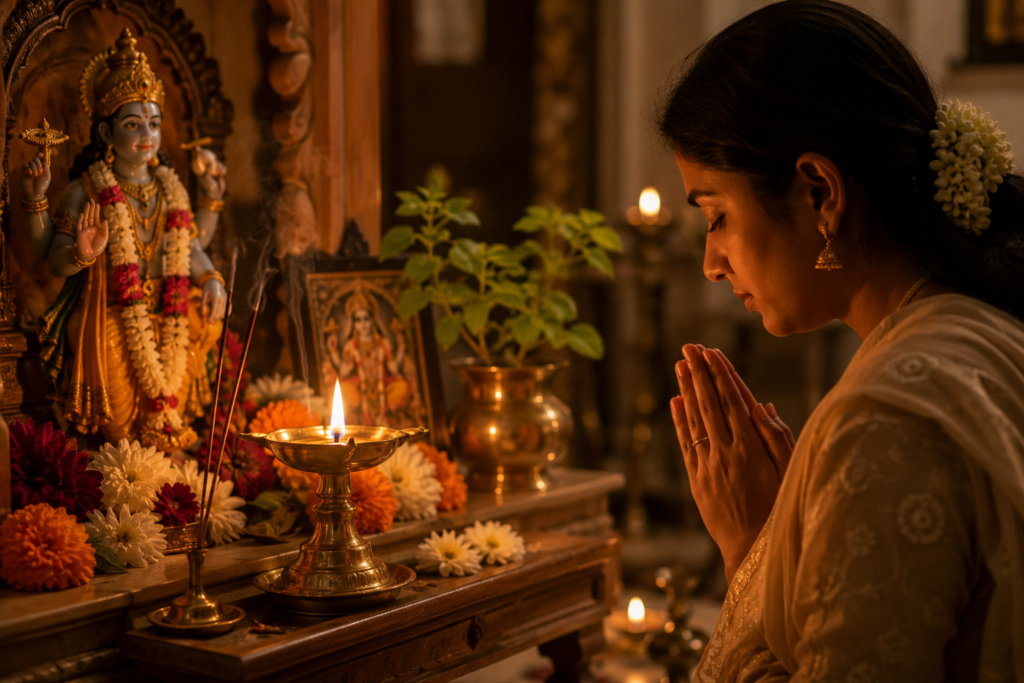
A Sacred Invitation to Inner Transformation
Parama Ekadashi continues to inspire devotees because its message transcends time.
It reminds us that true transformation rarely happens through dramatic events. More often, it begins quietly, through a sincere prayer, a moment of awareness, an act of discipline, or a conscious decision to move closer to Dharma.
The observance teaches that devotion is not merely ritual. It is a way of living with greater awareness, gratitude, humility, and purpose.
In a world filled with noise, urgency, and endless distraction, Parama Ekadashi offers something increasingly rare:
the opportunity to pause, reflect, and return to what truly matters.
Parama Ekadashi reminds us that spiritual growth is rarely sudden. It emerges through small acts of awareness, sincere devotion, patient discipline, and a willingness to walk the path of Dharma, even when the destination is not yet visible.