
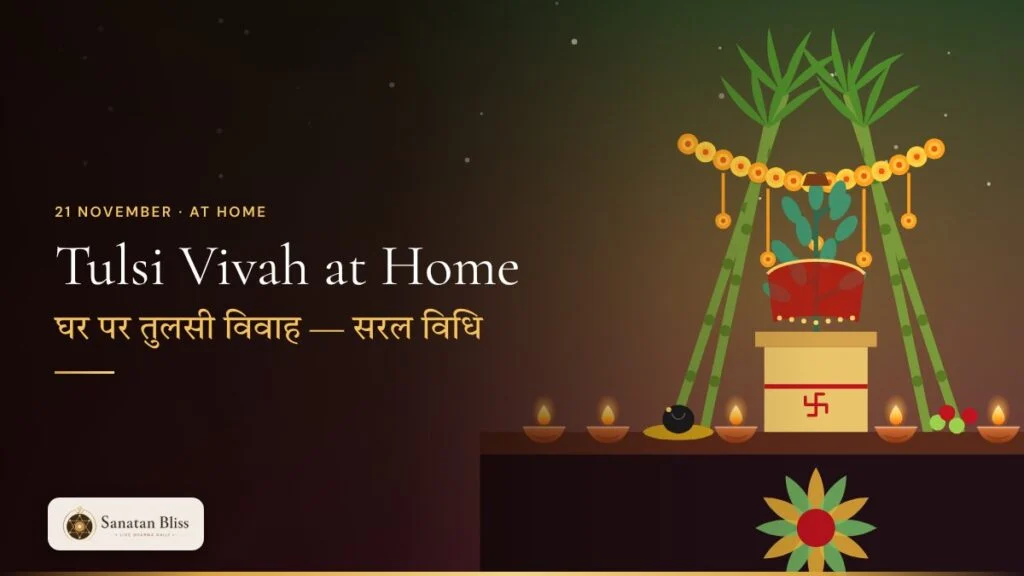
Tulsi Vivah 2026 is on Saturday 21 November, the day after Devutthana Ekadashi; many families hold it on the evening of the Ekadashi itself (20 Nov). You don’t need a courtyard or a priest: here is a simple version for a flat or small home that takes about 45 minutes, with the samagri, the steps and what to cook. The full traditional vidhi →
तुलसी विवाह 2026 शनिवार 21 नवंबर को है, देवउठनी एकादशी के अगले दिन; कई परिवार इसे एकादशी (20 नवंबर) की शाम ही करते हैं। इसके लिए आँगन या पुरोहित ज़रूरी नहीं: यहाँ फ़्लैट या छोटे घर के लिए लगभग 45 मिनट का सरल रूप है — सामग्री, क्रम और क्या बनाएँ। पूरी पारंपरिक विधि →
Why Tulsi is married to Bhagwaan Vishnuतुलसी का विवाह भगवान विष्णु से क्यों
Tulsi is revered as Vrinda, the devoted wife of Jalandhar, who became the tulsi plant; Bhagwaan Vishnu, in his Shaligram form, promised to marry her. After four months of rest (Chaturmas), Vishnu wakes on Devutthana Ekadashi, and his first auspicious act is this wedding — which also opens the season of human weddings.
तुलसी को जालंधर की पतिव्रता पत्नी वृंदा माना जाता है, जो तुलसी का पौधा बनीं; भगवान विष्णु ने शालिग्राम रूप में उनसे विवाह का वचन दिया। चार महीने के विश्राम (चातुर्मास) के बाद विष्णु देवउठनी एकादशी पर जागते हैं, और उनका पहला शुभ कार्य यही विवाह है — जिससे मनुष्यों के विवाहों का मौसम भी खुलता है।
Samagri for a small homeछोटे घर के लिए सामग्री
- Your tulsi plant in its pot, washed and placed on a small chowki or the balcony floor
- A Shaligram, or a small idol or picture of Bhagwaan Vishnu / Shri Krishna as the groom
- Four sugarcane stalks for the mandap (or banana leaves, or even marigold strings on four sticks)
- A red chunari, bangles, sindoor, bindi and a small mirror for Tulsi
- Yellow cloth for the groom, a garland each, kalava, roli, haldi, akshat
- Seasonal offerings: amla, ber, singhara, sweet potato, sugarcane pieces, and a sweet
- Ghee diya, incense, a bell or conch
- आपका तुलसी का पौधा गमले में, धोकर छोटी चौकी या बालकनी में रखा
- शालिग्राम, या दूल्हे के रूप में भगवान विष्णु / श्रीकृष्ण की छोटी मूर्ति या चित्र
- मंडप के लिए चार गन्ने (या केले के पत्ते, या चार डंडियों पर गेंदे की लड़ियाँ)
- तुलसी के लिए लाल चुनरी, चूड़ियाँ, सिंदूर, बिंदी और छोटा दर्पण
- दूल्हे के लिए पीला वस्त्र, दोनों के लिए माला, कलावा, रोली, हल्दी, अक्षत
- मौसमी अर्पण: आँवला, बेर, सिंघाड़ा, शकरकंद, गन्ने के टुकड़े, और एक मिठाई
- घी का दीया, धूप, घंटी या शंख
The 45-minute Tulsi Vivah45 मिनट का तुलसी विवाह
- Decorate (10 min): tie the four sugarcanes over the tulsi pot to form a mandap; draw a small rangoli; light the diya.
- Dress the bride: drape the red chunari over the tulsi, put bangles on a branch, apply haldi and a little sindoor to the pot.
- Bring the groom: place the Shaligram or idol on a plate in yellow cloth, to the right of the tulsi; offer chandan, tulsi leaves and flowers.
- Sankalp and puja: take water and akshat in your hand, say your name and the wish for a happy home, and worship both with roli, akshat, flowers and incense.
- Exchange garlands and tie the knot: place a garland on each, and tie one end of the groom’s cloth to Tulsi’s chunari (gathbandhan).
- Seven pheras: the man of the house carries the Shaligram around the tulsi seven times while the family sings or chants “Om Namo Bhagavate Vasudevaya”.
- Kanyadaan and aarti: the family that “gives” Tulsi offers her to the groom with folded hands; then sing the Tulsi aarti and shower akshat.
- Prasad: offer the seasonal fruits and sweet, then share them with neighbours — a wedding is meant to be shared.
- सजावट (10 मिनट): चार गन्नों को तुलसी के गमले के ऊपर बाँधकर मंडप बनाएँ; छोटी रंगोली बनाएँ; दीया जलाएँ।
- दुल्हन का शृंगार: तुलसी पर लाल चुनरी ओढ़ाएँ, एक डाल पर चूड़ियाँ पहनाएँ, गमले पर हल्दी और थोड़ा सिंदूर लगाएँ।
- दूल्हे का आगमन: शालिग्राम या मूर्ति को पीले वस्त्र में थाली पर तुलसी के दाहिनी ओर रखें; चंदन, तुलसी दल और फूल चढ़ाएँ।
- संकल्प और पूजा: हाथ में जल और अक्षत लेकर अपना नाम और सुखी घर की कामना बोलें, और दोनों की रोली, अक्षत, फूल और धूप से पूजा करें।
- जयमाला और गठबंधन: दोनों को माला पहनाएँ, और दूल्हे के वस्त्र का एक सिरा तुलसी की चुनरी से बाँधें (गठबंधन)।
- सात फेरे: घर के पुरुष शालिग्राम को लेकर तुलसी की सात परिक्रमा करते हैं, जबकि परिवार गीत गाता है या “ॐ नमो भगवते वासुदेवाय” जपता है।
- कन्यादान और आरती: तुलसी को “देने” वाला परिवार हाथ जोड़कर उन्हें दूल्हे को सौंपता है; फिर तुलसी आरती गाएँ और अक्षत बरसाएँ।
- प्रसाद: मौसमी फल और मिठाई अर्पित करें, फिर पड़ोसियों में बाँटें — विवाह बाँटने के लिए ही होता है।
Making it a family occasionइसे परिवार का उत्सव बनाएँ
- Let children decorate the mandap and choose the bride’s chunari — they remember the festivals they helped make.
- Two families can share the roles: one as the bride’s side, one as the groom’s, with a little baraat from the next flat.
- Tell the story of Vrinda and Vishnu while the pheras are taken.
- बच्चों को मंडप सजाने और दुल्हन की चुनरी चुनने दें — वे उन्हीं त्योहारों को याद रखते हैं जिन्हें बनाने में हाथ बँटाया।
- दो परिवार भूमिकाएँ बाँट सकते हैं: एक कन्या पक्ष, एक वर पक्ष, बगल के फ़्लैट से छोटी-सी बारात के साथ।
- फेरों के दौरान वृंदा और विष्णु की कथा सुनाएँ।
What to cookक्या बनाएँ
Keep it sattvik: no onion or garlic. Traditional choices are kheer or halwa, puri, a sweet potato or pumpkin sabzi, and fruit chaat with amla, ber and singhara. If anyone kept the Ekadashi fast, they break it with this prasad at the parana time on 21 November.
सात्त्विक रखें: प्याज़-लहसुन नहीं। पारंपरिक व्यंजन हैं खीर या हलवा, पूरी, शकरकंद या कद्दू की सब्ज़ी, और आँवला, बेर व सिंघाड़े की फल चाट। जिसने एकादशी का व्रत रखा हो, वह 21 नवंबर को पारण के समय इसी प्रसाद से व्रत खोले।